

Updated: 26-11-2026 | Blogs about Vietnam | Views: 1010
Picture Northern Vietnam, and two distinct images come to mind. In one, you are standing above the clouds on a rugged mountain ridge in Sapa, watching trekkers and town life swirl below. In the other, you are pedaling a bicycle past bamboo waterwheels and stilt houses in the quiet green valleys of Mai Chau and Pu Luong.
Both promise unforgettable scenery and local culture, yet the atmosphere and pace of travel couldn't be further apart. Choosing the right one comes down to the kind of trip you actually want to have.
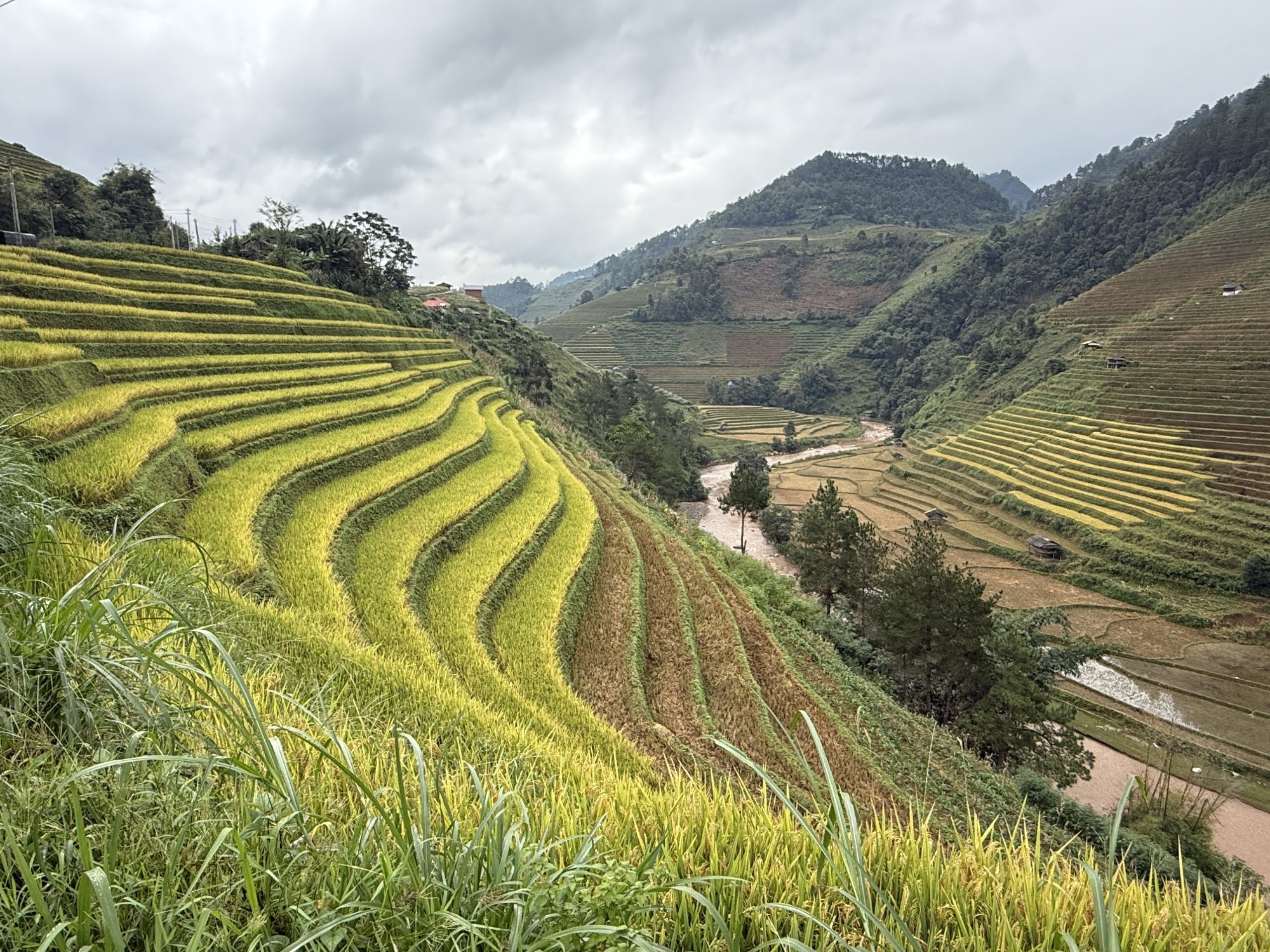
Sapa is hard to beat when it comes to dramatic landscapes. Steep mountains rise above deep valleys, while rice terraces follow the contours of the hillsides for miles. On clear days, the views are spectacular. When clouds roll in, the scenery takes on a completely different mood.
The Muong Hoa Valley is one of the best places to explore beyond Sapa town. Walking through villages such as Lao Chai and Ta Van takes you past terraced fields, small streams, local homes and mountain paths. It is a chance to see the landscape on foot rather than from a roadside viewpoint.
Sapa is also the gateway to Fansipan, Vietnam's highest mountain. The cable car makes the summit accessible to travelers who do not want to undertake a demanding trek, while adventurous visitors can explore longer hiking routes in the surrounding mountains.
Explore mountain valleys, ethnic minority villages and Bac Ha's colourful traditional market on a journey from Hanoi, with overnight train travel.
Explore the Sapa & Bac Ha TourHowever, Sapa has become a major tourism hub. The town is busy, with hotels, restaurants, shops and attractions. This is convenient if you enjoy having plenty of choices, but it can take away from the feeling of escaping into nature. For the best experience, I would spend less time in the town itself and more time exploring the surrounding valleys and villages.
Sapa is best for travelers who want impressive mountain scenery, trekking, Fansipan and a destination with plenty of facilities.
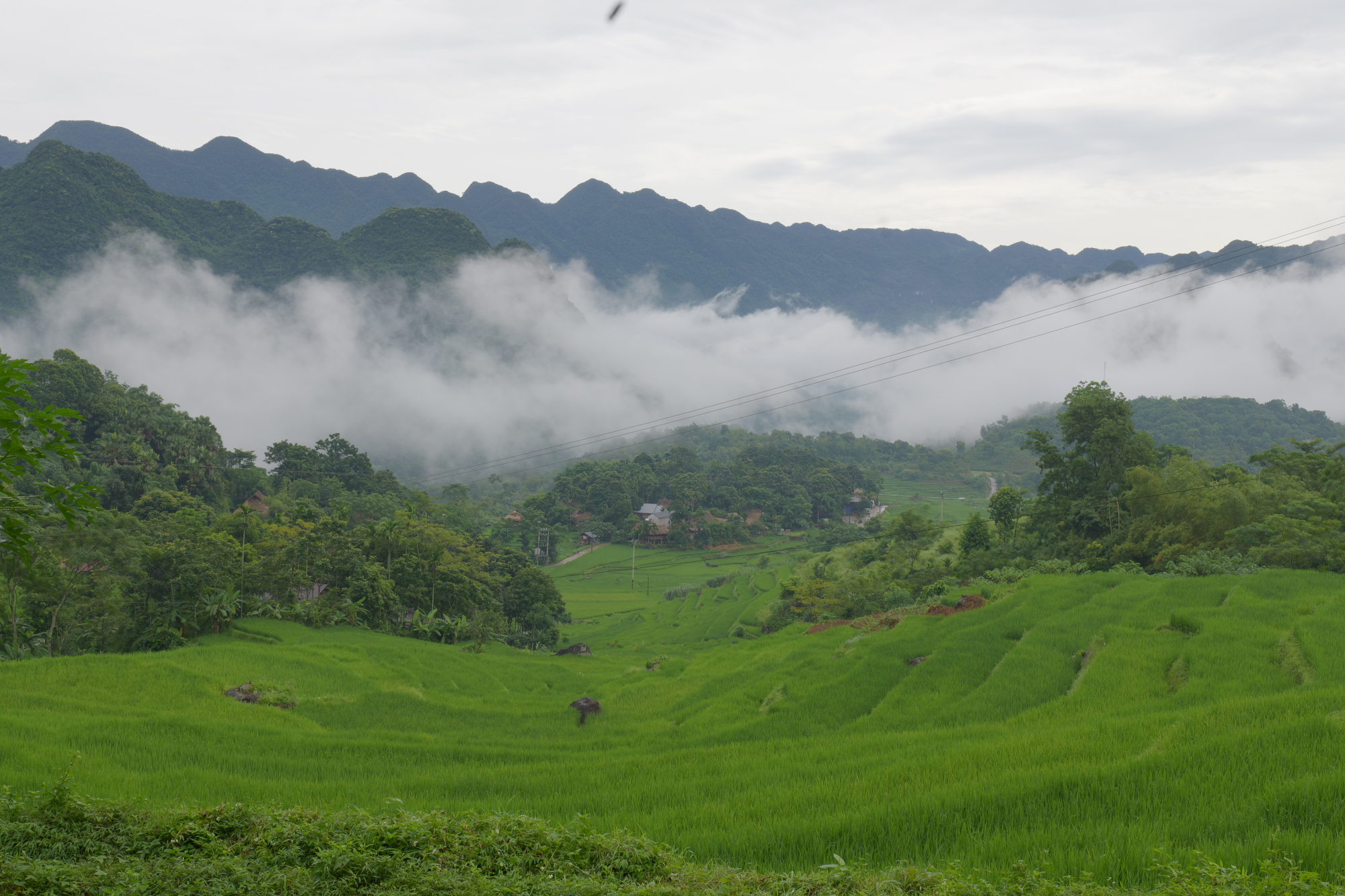
Mai Chau and Pu Luong offer a different side of northern Vietnam. Rather than towering mountain peaks dominating every view, the scenery unfolds through green valleys, limestone hills, rice fields and small villages.
Mai Chau is particularly enjoyable by bicycle. The valley is relatively gentle, making it easy to ride along village roads, pass rice paddies and stop wherever something catches your eye. You might see farmers working in the fields, children playing outside their homes or families going about their daily routines.
It is not a place that needs a packed itinerary. A slow morning cycling, a local lunch and an afternoon enjoying the countryside can be enough to make the experience memorable.
Further into the mountains, Pu Luong offers a more secluded landscape. It is also a wonderful destination for Pu Luong excursions, whether you prefer guided village walks, trekking through rice terraces or exploring the countryside by bicycle. Rice fields cling to hillsides, wooden water wheels sit along streams, and walking trails connect villages through valleys and forested slopes.
Pu Luong is where I would go for a few days away from busy tourist destinations. Staying at a countryside lodge overlooking the valley, waking up to mist over the mountains and spending the day walking through villages gives you a much more relaxed rhythm of travel.
The trade-off is that the scenery is less dramatic than Sapa's highest mountain landscapes, and activities are more focused on nature, village life and relaxation rather than major attractions.
Mai Chau - Pu Luong is best for travelers who enjoy cycling, gentle trekking, peaceful landscapes, countryside accommodation and a slower journey.
Discover Thai ethnic villages, cycle through rural landscapes, and explore Pu Luong's rice terraces on a 3-day journey from Hanoi.
Explore the 3-Day Mai Chau & Pu Luong Tour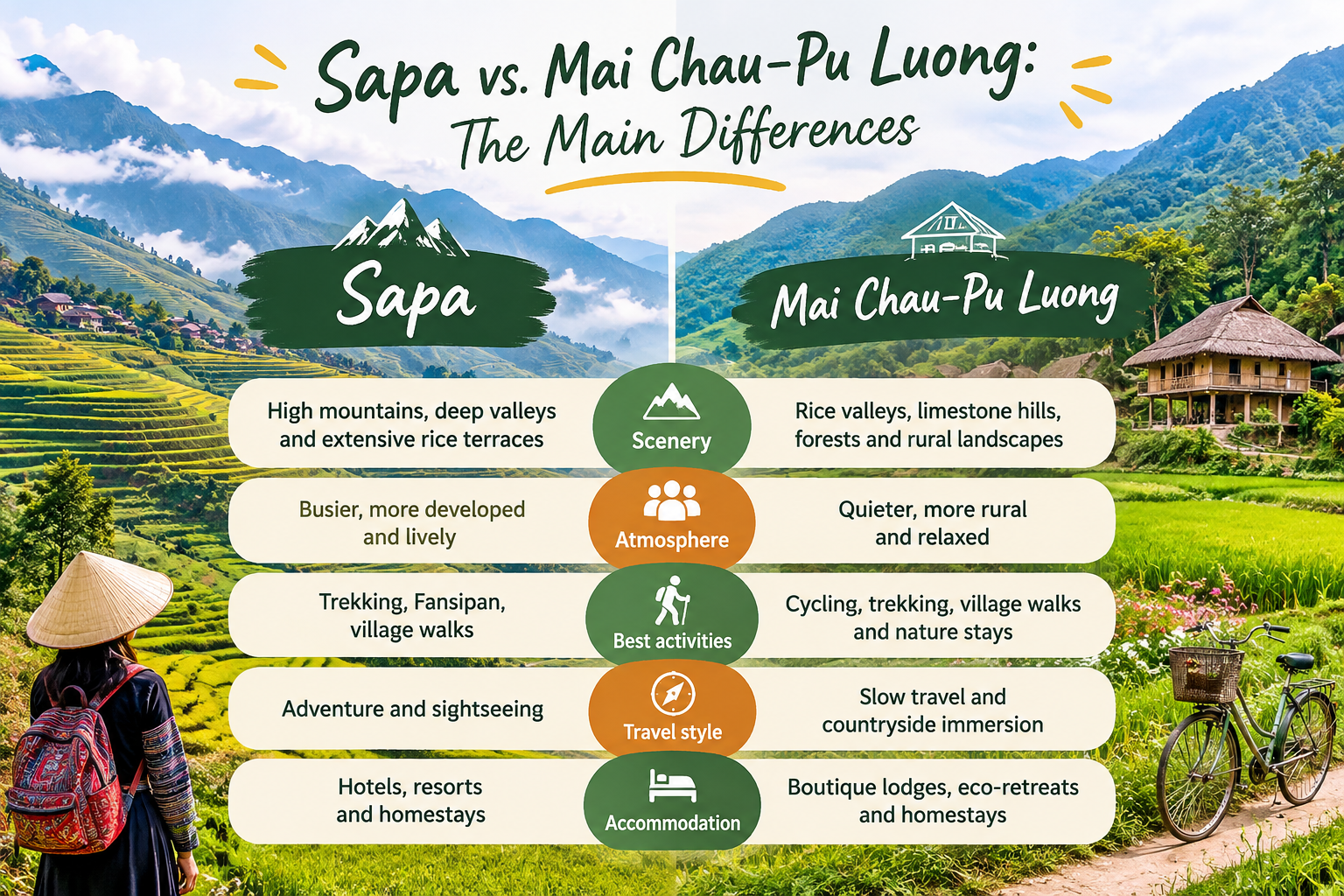
While it is possible on paper, combining both in a single trip is rarely the best use of your time.
Sapa is tucked into the far northwest near the Chinese border, whereas Mai Chau and Pu Luong sit southwest of Hanoi. There is no quick shortcut between them. Getting from one to the other eats up nearly a full day on winding mountain roads, leaving you exhausted and cutting into the slow mornings and village walks that make these places special in the first place.
If you only have a few days in the north, choose one base and enjoy it properly. Save the combined route for a slower, extended journey where you have at least 10 to 14 days to travel across the region without rushing.
If this is your first trip to northern Vietnam and you want the landscapes that often appear in photographs of the region, I would lean towards Sapa. Its dramatic mountains, rice terraces and trekking opportunities make it an impressive destination, especially if you enjoy being active.
But if you have already visited Sapa, dislike crowded tourist towns or simply want a few days surrounded by nature, Mai Chau - Pu Luong is an excellent alternative. It offers a more relaxed experience, with fewer distractions and more opportunities to enjoy the countryside at your own pace.
Neither destination is universally better. Sapa is more dramatic, while Mai Chau - Pu Luong is more laid-back. One is better suited to mountain adventure; the other to slowing down and enjoying rural Vietnam.
If you have enough time, you can visit both. They complement each other well, although combining them requires additional travel time and careful itinerary planning.
Ultimately, choose Sapa for the mountains you want to explore, or Mai Chau - Pu Luong for the countryside you want to settle into for a few days. Both offer a memorable escape from the cities, just in very different ways.
Trek through rice terraces and traditional villages, enjoy bamboo rafting, and discover hidden waterfalls on a 3-day Pu Luong adventure.
Explore the 3-Day Pu Luong Trek
Active & Adventure - 3 days 2 nights

Active & Adventure - 3 days 2 nights

Active & Adventure - 3 days 2 nights


